TWO:In 1820 our imports of foreign and colonial merchandise were valued at ¡ê32,000,000; our exports of foreign and colonial merchandise at ¡ê10,000,000; and our exports of British and Irish produce and manufactures at ¡ê38,000,000. In 1840 these sums had respectively increased to ¡ê67,000,000, ¡ê13,000,000, and ¡ê102,000,000, setting aside odd numbers. From 1831 to 1840 the average annual export of British produce and manufactures was ¡ê45,000,000, while in the nine subsequent years it was nearly ¡ê56,000,000. From[423] 1830 onwards the value of our exports to France increased sixfold, notwithstanding the jealous system of protection that prevails in that country. The sphere of our commercial operations was being continually enlarged from year to year, and the enterprise of our merchants was continually opening up fresh markets in distant parts of the world. The value of the exports of British and Irish produce in 1820 was as follows:¡ªTo Northern Europe, ¡ê11,000,000; to Southern Europe, ¡ê7,000,000; to Africa, ¡ê393,000; to Asia, nearly ¡ê4,000,000; to the United States of America, nearly ¡ê4,000,000; to the British North American Colonies and the West Indies, ¡ê5,750,000; to Central and South America, including Brazil, ¡ê3,000,000. The total value of our exports to foreign countries, and to our colonies in that year, was ¡ê36,000,000. In 1840 we exported the following quantities, which, it will be seen, show a large increase:¡ªTo Northern Europe, about ¡ê12,000,000; to Southern Europe, ¡ê9,000,000; to Africa, ¡ê1,500,000; to Asia, ¡ê9,000,000; to the United States, ¡ê5,250,000; to the British North American Colonies, ¡ê6,500,000; to the foreign West Indies, ¡ê1,000,000; to Central and Southern America, including Brazil, ¡ê6,000,000; total, ¡ê51,000,000: showing an increase of ¡ê15,000,000 in the annual value of our exports to foreign countries during twenty years.
THREE:Scarcely had Parliament ceased to sit, and the king was gone to spend the summer months in Germany, when the vigilance of the Ministry was demanded to ward off a fresh invasion. Alberoni, defeated in his schemes on France, and his hopes of the invasion of England by Charles XII. crushed by that monarch's death, determined now to make a grand effort to support the Pretender himself. For this purpose, he invited him to Spain, and at the same time began the equipment of a formidable fleet to carry over a Spanish force, under the command of the Duke of Ormonde, to the shores of Britain. The Pretender was not intended to accompany the expedition, but to be in readiness to follow on the first news of its[43] successful landing. But it was no more destined to reach these shores than the Grand Armada. It has always been the fate of invading squadrons to encounter providential tempests in coming hitherward, and the usual hurricane was ready to burst. Scarcely, indeed, had the fleet lost sight of Cape Finisterre before the storm swooped down upon it. For twelve days the terrible Bay of Biscay was swept by a frightful wind, which drove the vessels in all directions, and rendered it impossible to manage them. Fortunate would it have been if every vessel had failed to reach the shores at which they aimed; but two vessels, on board of which were the Earls Marshal and Seaforth, and the Marquis of Tullibardine, accompanied by about three hundred Spanish soldiers, reached Scotland, and landed, on the 16th of April, at Kintail, in Ross-shire. In the hope that Ormonde would still reach England, this small force lay quiet for some time, and so little did they excite notice, that the Government imagined that they had re-embarked. Their presence there, however, had the mischievous effect of exciting some few of the Highlanders to join them. They seized Donan Castle, and thus attracted the attention of the English. Some vessels of war arrived upon the coast. The castle was speedily retaken, and Lord Carpenter, the commander of the forces in Scotland, sent some troops from Inverness against them. General Wightman, the officer thus despatched, was attended by about a thousand men, and found the enemy, now swollen to about two thousand, strongly posted at Glenshiel. He immediately attacked them, and the miscellaneous force speedily dispersed. The Highlanders, who knew the country, rapidly disappeared amongst the hills, and the Spaniards had no other resource than to lay down their arms.
FORE:Mr. Nicholls next applied himself to the solution of the problem how the workhouse system, which had been safely and effectually applied to depauperise England, might be applied with safety and efficiency to put down mendicancy and relieve destitution in Ireland. In that country the task was beset with peculiar difficulties. Assuming the principle that the pauper should not be better off than the labourer, it would be difficult to devise any workhouse dress, diet, or lodging that would not be better than what many of the poor actually enjoyed. But, on the other hand, the Irish poor were fond of change, hopeful, sanguine, migratory, desultory in their habits, hating all restraints of order and system, averse from the trouble of cleanliness; and rather than be subject to the restrictions and regularity of a workhouse, an Irishman, in health and strength, would wander the world over to obtain a living. Hence, no matter how well he might be lodged, fed, and clad in a workhouse, he could not endure the confinement. Consequently, Mr. Nicholls found in the state of Ireland no sufficient reason for departing from the principle of the English Poor Law, which recognises destitution alone as the ground of relief, nor for establishing a distinction in the one country that does not exist in the other.During the winter of 1812 and the spring of[63] 1813 Buonaparte was making the most energetic exertions to renew the campaign against Russia and the German nations that were now uniting with the Czar. He called out new conscriptions, and enforced them with the utmost rigour; the militia were drafted extensively into the regular army, and the sailors, whose service had been annihilated by the victorious seamen of Great Britain, were modelled into regiments, and turned into soldiers. He sent for part of his forces from Spain; and in the spring he was enabled to present himself in Germany at the head of three hundred and fifty thousand men. But this was a very different army from that which he had led into and lost in Russia¡ªan army of practised veterans, familiar with victory through a hundred fights. It was necessarily but ill-disciplined, and much more full of the sense of wrong in having been dragged from home and its ties than of any thirst of glory. The cavalry was especially defective, and had lost the commander who gave it such spirit by his own example. Disgusted by the insolence and sarcasms of Buonaparte, and believing that his career was about to end, Murat quitted his command on the 16th of January, 1813, and hastened to Naples, where he was not long in opening negotiations with Great Britain and the other Powers for the acknowledgment of his kingdom as one independent of France, and ranking with the other established Powers of Europe. Nor was this the only alarming circumstance. Bernadotte was at the head of an army of Swedes against him¡ªBernadotte whom he had driven by the same insolent and unbearable domination into the arms of his enemies, and whom he now denounced as a renegade Frenchman who had renounced his country. The truth, however, was that Bernadotte had been adopted by a new country, and was bound to defend it.
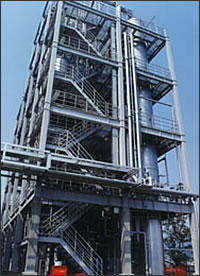
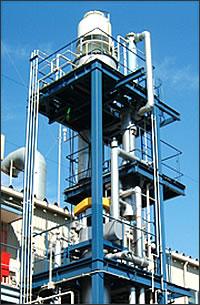
Methanol refinement systems, amyl alcohol refinement systems, ethanol refinement systems, hexanol distillation systems, propanol refinement systems, cyclohexanol distillation systems, isopropanol dehydration systems, ethylene glycol recovery systems, and butanol distillation systems.
FORE:DEAN SWIFT.
Hexane distillation systems, tall oil distillation systems, benzene distillation systems, lubricating oil refinement systems, xylene-free distillation systems, low-boiling gas distillation systems, ethylbenzene recovery systems, fusel oil distillation systems, naphthalene distillation systems, propylene recovery systems, and turpentine oil distillation systems.
FORE:BENARES. (From a Photograph by Frith and Co.)
Ether distillation systems, camphor distillation systems, epichlorohydrin distillation systems, aniline distillation systems, dioxane refinement systems, acetonitrile distillation systems, furfural refinement systems, formalin distillation systems, cyclohexane distillation systems, monoethanolamine rectification systems, polyglycol ether distillation systems, dimethylformamide recovery systems, acrylic glycol ether distillation systems, acrylonitrile refinement systems, acetone recovery systems, pyridine distillation systems, methyl ethyl ketone recovery systems, picoline distillation systems, methyl isobutyl ketone recovery systems, and acetaldehyde recovery systems.
